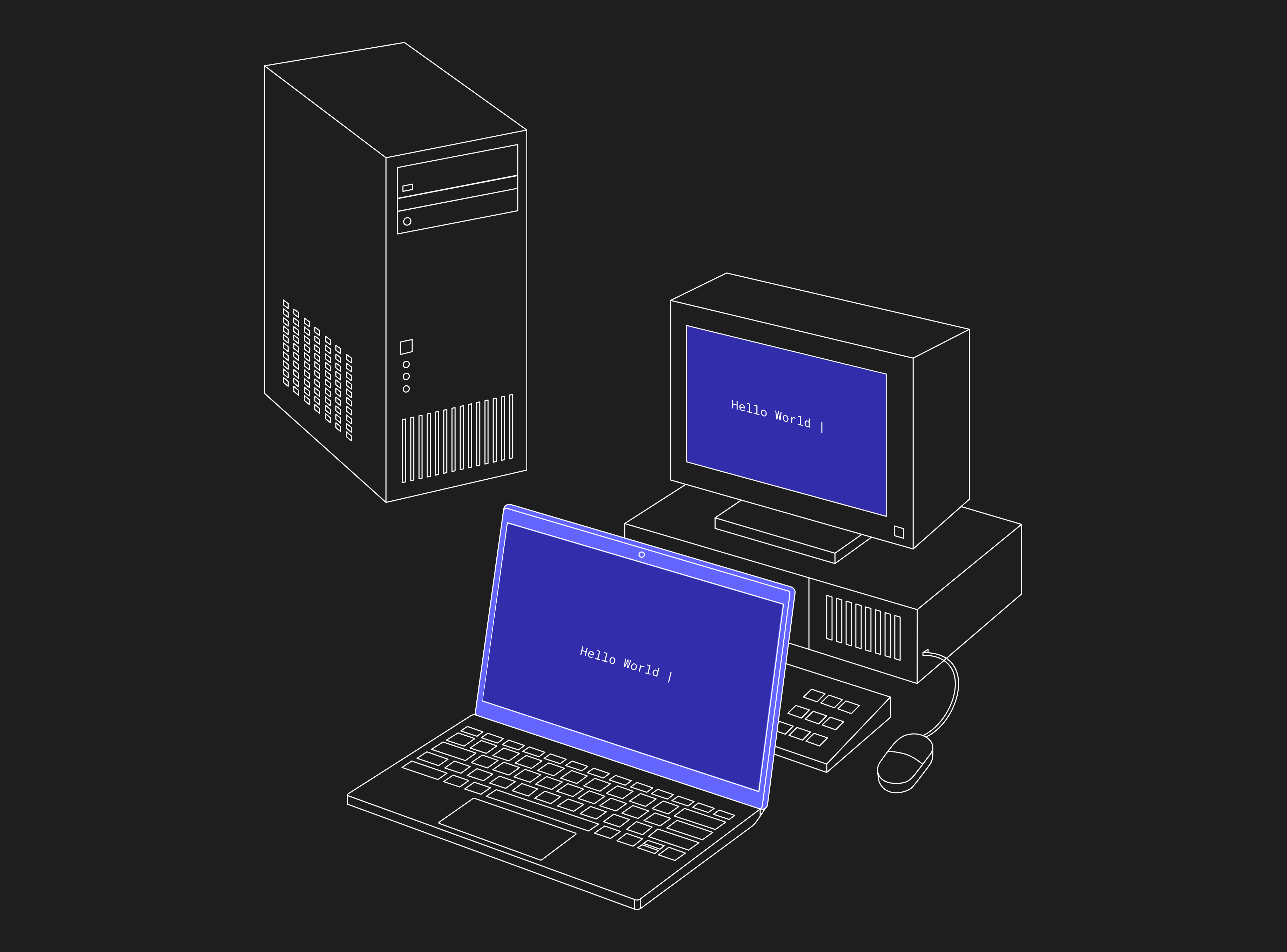
We have spent more than a decade building remote desktop software. Our first business, Parsec, was sold to Unity in 2021. When that happened, I remember saying, “I’m never working on a remote desktop again.” Feelings change over time. While we built Parsec primarily for gamers for the first four years, we survived long enough to get lucky and discovered product-market fit with a high-performance remote desktop product for game developers. We quickly sold that business to Unity with a shared vision that Parsec would anchor a suite of tools sold to enterprises. Unfortunately for that vision, when the ZIRP era ended at the beginning of 2022, Unity made the right decision to refocus on its core offerings to maximize profit. This left us feeling like we had unfinished business in building something bigger anchored on a high-performance remote desktop protocol.
Phaze is the answer to that feeling. We are starting with remote desktop again because we believe enterprises need a great solution - not something that is just good enough. Numerous products on the market stopped innovating and increased prices following PE-backed acquisitions. Other market leaders are being shut down. And all of this is happening when we believe the demand for thin clients is going to increase significantly. The model for human-computer interaction is dramatically changing with AI and thick (high-performance) computing devices are skyrocketing in price due to significant supply shortages across the hardware stack. Providing employees with expensive computers will be unnecessary because most of what a computer will need to do is consume tokens from models. For the people with the most demanding and high-performance needs, computers will be accessible to them when they need them and travel with them through low latency streaming protocols. More and more companies are opting to rack CAD and 3D graphics machines in data centers or they’re relying on cloud workstations because they’re easier to manage, the data is safer, and the 1,200 watts required for a professional GPU-based machine make it infeasible to provide a workstation at each desk.
The only thing holding back this transition to thin clients for every workstation user is a high-performance remote desktop that feels the same as sitting with the computer. We are working to provide that feeling because if we deliver on that, our hypothesis is that everyone can rethink their workstation purchasing behavior. We believe it’s possible to carry access to the most powerful computers in the world in your pocket and use those thin clients with any screen around you. We’re also betting that if we deliver this experience for workstation users that everyone will eventually transition to this model. When that happens, Phaze will be a central component of every IT team’s infrastructure and earn the right to provide more services that help IT teams manage this new era of enterprise computing.
Beyond all of that, we also foresee a time when AI agents will get good enough at computer use to do a meaningful amount of computer interaction on behalf of end users. To do that, the AI agents will also need to access computers and use them when they need them. These ephemeral agent-used devices will be a new type of hardware that IT organizations need to manage and provide to employees and their agents.
While the vision is larger than a world-class remote desktop, we first have to deliver on our promise to make it feel like you’re sitting at a workstation even if it’s hundreds of miles away. Achieving this is our entire focus and what we’re investing all of our energy on. We hope you’ll join us on the journey.